There is something strangely joyful about choosing the little things that become part of a special moment.
When a baby girl arrives, families often spend hours thinking about tiny clothes, soft blankets, little shoes, and all those adorable details that somehow make everyone smile.
Choosing sunglasses, oddly enough, can have that same feeling when you’re picking a pair for yourself, a loved one, or even planning a thoughtful gift for a new parent. It isn’t just about blocking sunlight. The right pair can become part of somebody’s everyday personality.
And this is where understanding sunglass types gets interesting. Two pairs can protect your eyes equally well but look completely different on the face.
One may create a soft, elegant appearance while another gives you a sharp, confident look. The secret usually comes down to the relationship between sunglass shapes, sunglass frames, lenses, and your natural face shapes.
So, instead of grabbing the first pair that looks fashionable on a shelf, let’s take a little journey through the world of eyewear.
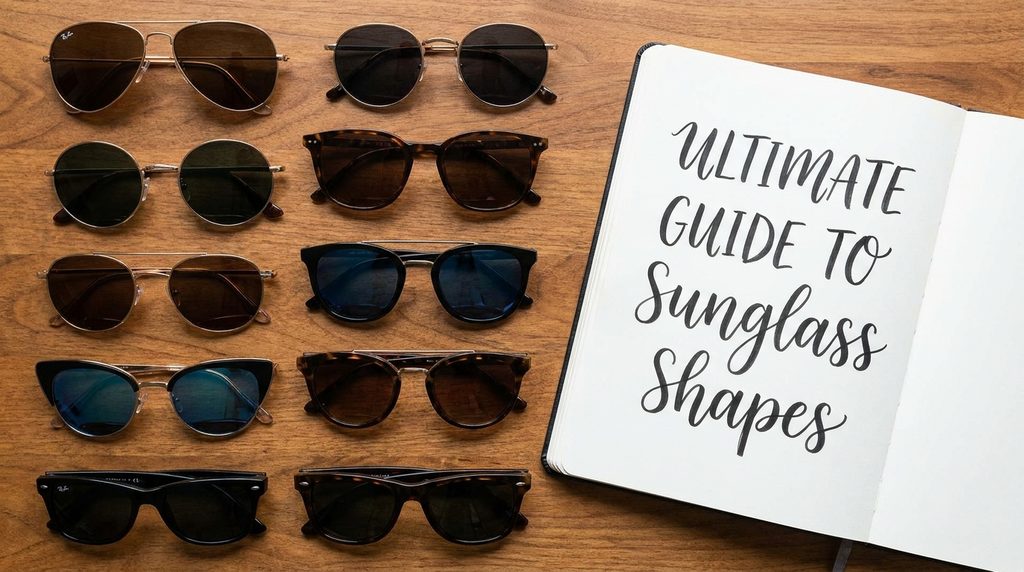
From classic Aviator sunglasses to playful Cat-eye sunglasses, from practical sports designs to dramatic oversized frames, this guide explores the different types of sunglasses and explains where each shape fits best.
| Sunglass Type | Best For |
|---|---|
| Aviator | Oval, square, heart-shaped faces |
| Wayfarer | Most face shapes |
| Round | Square, angular faces |
| Cat-Eye | Heart, oval faces |
| Square | Round, oval faces |
| Rectangle | Round, oval faces |
| Oversized | Oval, heart-shaped faces |
| Browline | Oval, round faces |
Why Sunglass Shape Actually Matters
When people talk about sunglasses, they often focus on color first. Black, brown, gold, tortoiseshell, blue, maybe something wildly pink if you’re feeling brave. But shape quietly does a lot more work than people realize.
The shape of a frame can change how your facial features appear. It can emphasize cheekbones, soften a strong jaw, balance a broad forehead, or add definition to a naturally rounded face. That’s why face shape compatibility is such a useful starting point when choosing eyewear.
There isn’t one magical rule that says a particular face must wear one particular frame. Faces are wonderfully individual, and real people don’t come in six perfectly measured categories. Still, understanding face shape and sunglasses gives you a practical foundation before you start experimenting.
And yes, experimentation is half the fun. Sometimes the pair you thought would look ridiculous turns out to be the one you never want to take off. Happens all the time.
Understanding the Main Face Shapes
Before exploring the major sunglass styles, it helps to understand the basic face categories.
An oval face usually has balanced proportions, with the face being somewhat longer than it is wide. The forehead and jaw tend to appear relatively balanced, making many frame styles work comfortably.
A round face generally has softer angles, fuller cheeks, and similar width and length. Angular frames can create contrast and add definition.
A square face often has a stronger jawline, broader forehead, and noticeable angles. Curved or rounded lenses can introduce visual softness.
A rectangular face is longer than it is wide, so frames with greater height or oversized lenses can help create a sense of balance.
A heart-shaped face commonly features a broader forehead and narrower chin. Frames that add visual weight toward the lower portion can create harmony.
A diamond-shaped face often has prominent cheekbones with a narrower forehead and jawline. Curved, oval, or distinctive upper-frame designs can highlight those cheekbones beautifully.
Of course, some people have an angular face that doesn’t neatly fit any single category. That’s perfectly normal. Your face doesn’t need to pass a geometry exam before buying sunglasses.
Aviator Sunglasses: The Classic That Refuses To Leave
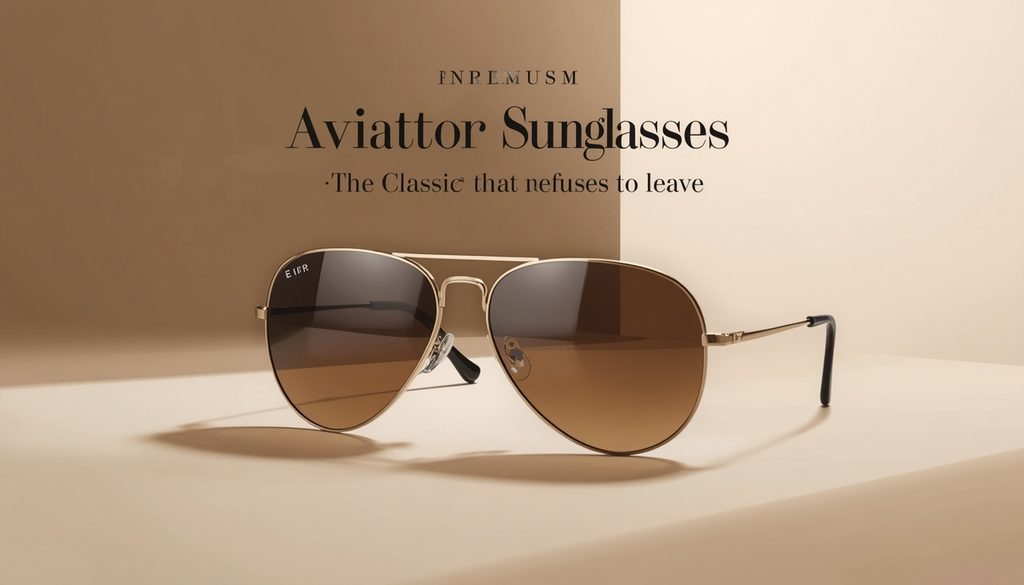
Few designs have the cultural staying power of Aviator sunglasses. Their recognizable teardrop-shaped lenses, thin metal frames, and often distinctive double bridge have made them a symbol of classic eyewear.
The design traditionally features large lenses that extend slightly downward. This creates a relaxed yet confident appearance, while metal construction can give the frame a lighter visual feel.
Aviator sunglasses + oval face can be a particularly easy combination because an oval face tends to accommodate many proportions. They can also work beautifully with angular facial structures because the curved lenses contrast against stronger lines.
If you’re looking for a classic style that doesn’t feel trapped in one decade, aviators are hard to ignore. They have a little vintage magic, but somehow still look completely normal walking down a modern street.
Navigator Sunglasses: A Structured Take On Aviators
Navigator sunglasses borrow some of the recognizable qualities of aviators while introducing a more structured shape. Their lenses are generally less dramatically teardrop-shaped and may feature a stronger upper frame.
For people who like navigator frames but want something with a slightly more substantial appearance, this style can be a nice middle ground.
They can complement an oval face, rectangular face, or angular features particularly well. The stronger horizontal structure may add definition without making the face appear overwhelmed.
If aviators feel a little too delicate but square frames feel too serious, navigators sit somewhere pleasantly in between.
Wayfarer Sunglasses: Everyday Style With Character
Wayfarer sunglasses are one of those designs that seem to fit almost every era. They became strongly associated with mid-century and later popular culture, but their basic silhouette remains highly wearable today.
The frame usually features a trapezoidal or slightly angular structure, often with plastic frames and a noticeable upper section.
For sunglasses for round face, wayfarer frames can be especially useful because their angular construction contrasts with softer facial curves.
They also suit people who want an everyday pair rather than something extremely dramatic. Think jeans, sneakers, weekend errands, road trips, coffee, and suddenly realizing you have been wearing the same sunglasses for three years.
That is the quiet power of a good wayfarer.
Round Sunglasses: Soft Lines With Retro Charm
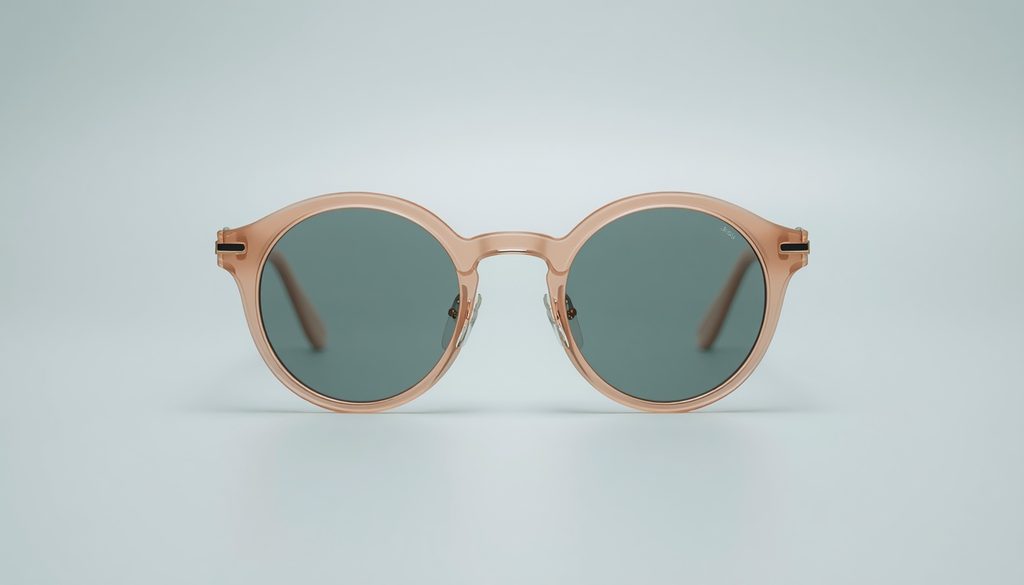
Round sunglasses create a very different visual effect from angular designs. Their circular lenses bring softness and a distinctly retro style.
People with a square face often enjoy this contrast because rounded frames can visually soften strong facial angles. The same idea applies to other angular facial structures.
Round frames can also produce a thoughtful, artistic, or vintage-inspired appearance. Depending on the material, they can feel minimalist, bohemian, academic, or downright old-school.
For anyone searching for round frames, consider the size carefully. Extremely small circular lenses create a very different impression from large, oversized round sunglasses.
Shape matters, but proportion matters too.
Rectangular Sunglasses: Clean, Sharp, And Modern
Rectangular sunglasses use straight edges and horizontal proportions to create a more defined appearance.
They can work particularly well for people with softer facial contours. On a round face, rectangular frames introduce angular contrast and can make the overall appearance feel more structured.
For a rectangular face, however, very narrow rectangular frames may emphasize facial length. Larger lenses or slightly softer corners may provide a more balanced result.
This style is also popular among people who prefer a modern aesthetic. The shape tends to look polished without needing lots of decorative details.
Cat Eye Sunglasses: A Little Drama Never Hurt
Few sunglass styles are as instantly recognizable as Cat-eye sunglasses.
Their defining characteristic is the up-swept edges, which draw attention toward the temples and upper face. Depending on the design, the effect can be subtle and sophisticated or wonderfully dramatic.
Cat-eye sunglasses + heart-shaped face can create an appealing balance because the lifted outer corners complement the upper portion of the face while adding structure.
Cat-eye frames are also strongly connected with vintage glamour, although contemporary versions can look sleek and minimalist.
If ordinary eyewear feels a bit too ordinary, cat-eye sunglasses might be the little rebellion you were looking for.
Oversized Sunglasses: Maximum Impact
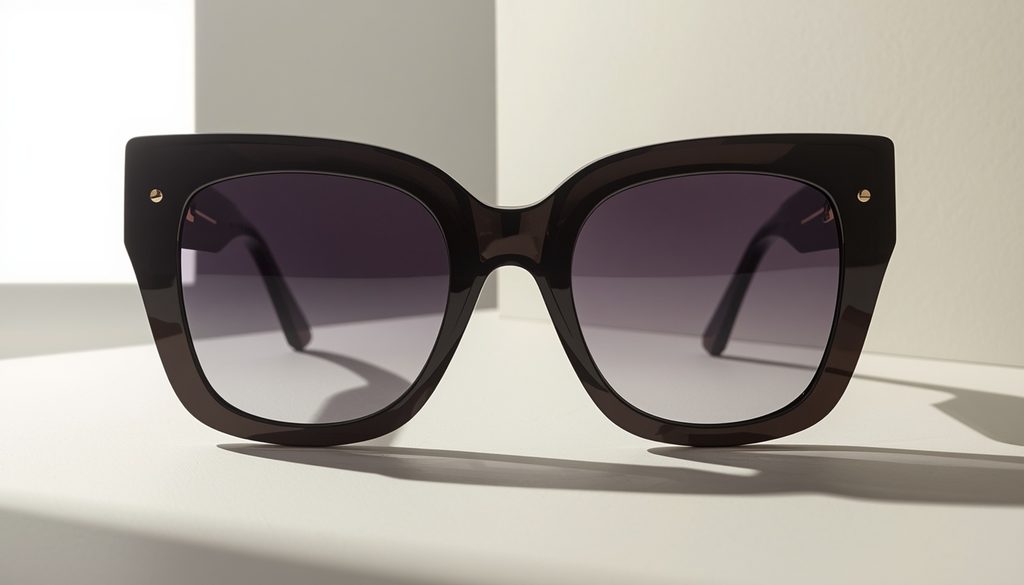
Oversized sunglasses are designed to make their presence known. They feature oversized lenses, wider frames, or both.
For those looking for oversized sunglasses styles, the key isn’t simply buying the biggest pair available. Proportion still matters. A frame should feel intentional rather than like it accidentally landed on your face.
People with a diamond-shaped face may enjoy oversized designs because larger lenses can complement prominent cheekbones and create a balanced visual frame.
Oversized sunglasses can also provide substantial physical coverage around the eyes, although actual eye protection depends on lens quality and UV performance rather than size alone.
Square Sunglasses: Strong Geometry
Square sunglasses are all about defined corners and bold structure. They can create a confident, contemporary appearance and work especially well when you want your eyewear to become part of your fashion statement.
For sunglasses for round face, square frames provide useful contrast. The sharp edges introduce geometry where the face naturally has softer curves.
Those with very angular facial features may prefer slightly softened square frames rather than extremely rigid corners. Small changes in frame curvature can make a surprisingly big difference.
Wraparound Sunglasses: Built For Coverage
Wraparound sunglasses curve around the sides of the face, extending the frame beyond a traditional front-facing shape.
Their major advantage is functional. Wraparound frames can help limit light entering from the sides and may provide additional wind protection, depending on their design.
This makes them particularly useful as sunglasses for outdoor activities, including cycling, hiking, biking, and other situations where movement and changing light conditions matter.
They can also offer increased peripheral vision compared with some highly enclosed designs, though actual performance varies by model.
For outdoor eyewear, fashion is nice. Stability and coverage are nicer.
Browline And Clubmaster Sunglasses
Browline sunglasses emphasize the upper part of the frame, creating visual weight along the brow.
The style is often associated with a scholarly, retro, or sophisticated appearance. Browline sunglasses + oval face can be an especially versatile pairing because balanced facial proportions allow the upper frame to become a defining feature without overwhelming the face.
Clubmaster sunglasses are closely related, and the Ray-Ban Clubmaster is one of the best-known examples of the style. These frames combine a stronger brow section with thinner lower rims, producing a blend of vintage character and contemporary usability.
They can work beautifully for someone who wants a retro style without wearing something that feels like a costume from another decade.
Shield Sunglasses: One Lens, Big Personality
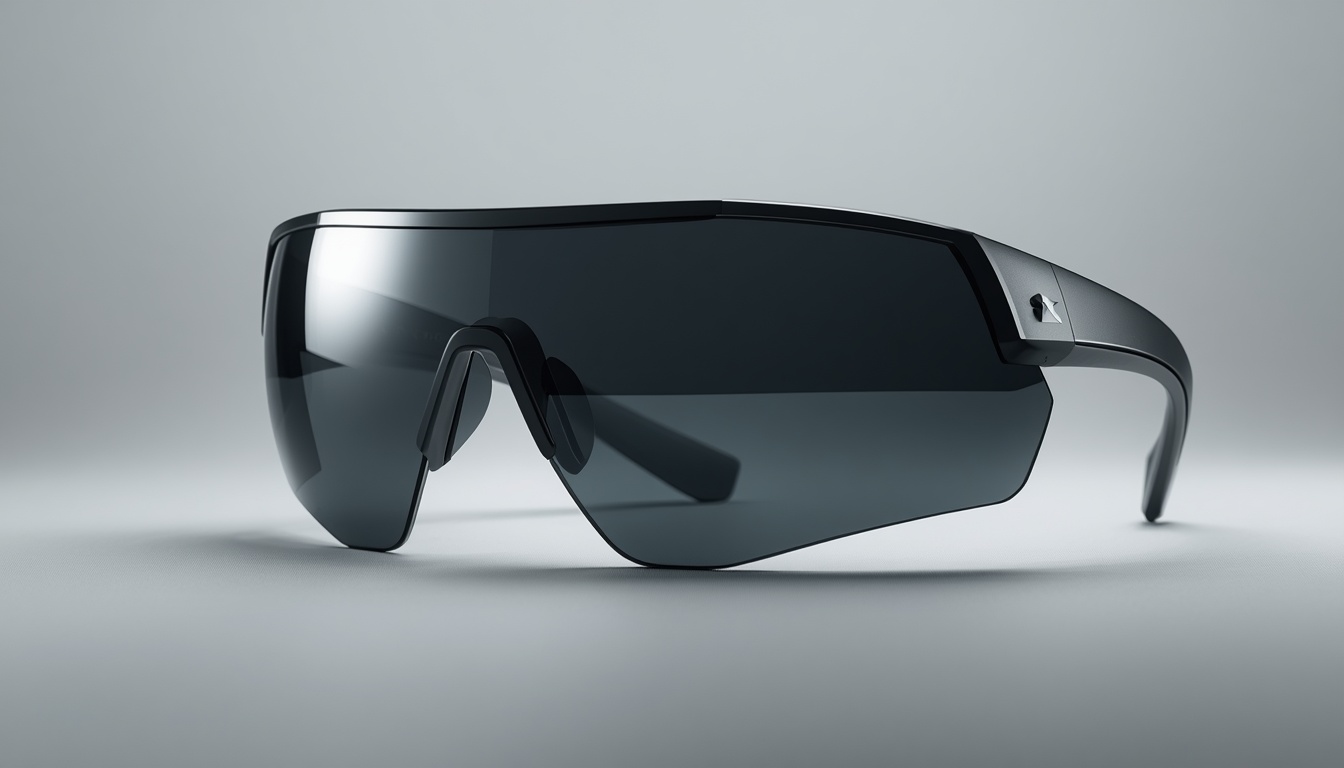
Shield sunglasses take the concept of coverage in another direction. Instead of two clearly separated lenses, many designs use a single continuous lens extending across much of the face.
The result is bold, sporty, and sometimes almost futuristic.
With geometric lenses, unusual frame construction, and substantial coverage, shield sunglasses are often associated with a futuristic aesthetic.
They can be especially practical for outdoor environments where broad visual coverage is desirable. But again, don’t assume appearance equals protection. Check the actual lens specifications.
Sports Sunglasses For Active Days
Sports sunglasses are designed around movement rather than simply appearance.
They may feature curved frames, secure nose pieces, lightweight construction, impact-resistant materials, and lens technologies intended for bright outdoor environments.
For cycling, biking, hiking, skiing, or running, stability becomes extremely important. A beautiful pair that constantly slides down your nose isn’t exactly winning the eyewear Olympics.
Look for secure fit, suitable coverage, good optical clarity, and appropriate UV protection when choosing sports eyewear.
Butterfly Sunglasses: Elegant And Feminine
Butterfly sunglasses usually feature broad lenses that flare outward toward the temples.
The shape can emphasize the upper face and draw attention toward the cheekbones, creating a glamorous and distinctly feminine look.
They’re a natural option for anyone attracted to oversized eyewear but wanting something softer and more decorative than a square frame.
Butterfly designs can range from delicate to dramatic, so there is plenty of room to match your own personal style.
Hexagonal, Octagonal, And Geometric Sunglasses
Not every pair needs to look familiar.
Hexagonal sunglasses use six-sided geometry to create a distinctive silhouette. Octagonal sunglasses take the idea even further, creating eight-sided lens shapes that feel playful and architectural.
These designs fall comfortably into the world of geometric sunglasses and are often chosen by people who want their eyewear to feel less conventional.
They can look particularly interesting on balanced facial structures because the unusual geometry becomes the main visual feature.
Then there are niche styles such as Flipper shades, which push the idea of unusual sunglasses even further. These aren’t necessarily everyday choices, but eyewear doesn’t always need to behave itself.
Choosing Sunglasses Based On Face Shape
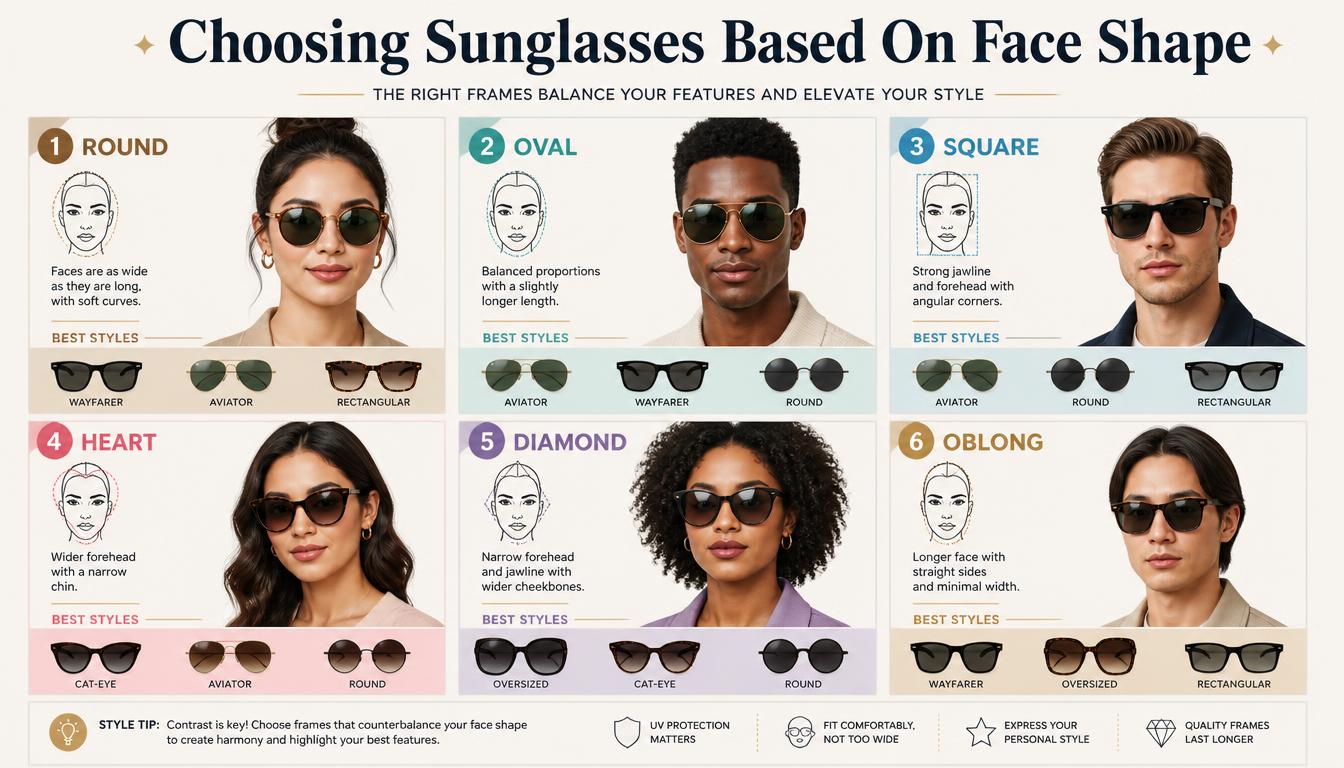
If you’re trying to find the best sunglasses for face shape, start by identifying your natural proportions rather than chasing trends.
For an oval face, most major frame families can work, including aviators, wayfarers, browlines, and geometric styles.
For a round face, angular designs such as square and rectangular frames can provide useful contrast. Wayfarer sunglasses are another popular option.
For a square face, curved designs such as round sunglasses, oval-inspired shapes, and softer aviators can balance stronger jawlines.
For a rectangular face, consider larger or taller frames that add visual width and reduce the appearance of excessive length.
For a heart-shaped face, cat-eye and certain butterfly styles can complement the upper face, while frames with visual weight toward the lower portion may create balance.
For a diamond-shaped face, oversized, butterfly, browline, and clubmaster styles can highlight the cheekbones while balancing narrower forehead and jaw proportions.
These aren’t strict laws. They’re starting points. Your actual facial symmetry, features, preferred proportions, and comfort should have the final say.
Sunglasses + UV Protection: The Part That Matters Most
Style gets the attention, but sunglasses + UV protection is the part you shouldn’t treat casually.
Sunlight contains UV rays, also called ultraviolet rays, and prolonged exposure to UV radiation can contribute to several eye-related problems over time.
Excessive sun exposure has been associated with conditions such as cataracts, while intense ultraviolet exposure can also contribute to acute problems such as photokeratitis.
That doesn’t mean you should panic every time you step outside. It simply means quality eyewear deserves attention.
Look for sunglasses clearly labeled with 100% UV protection or protection against both UVA and UVB radiation. Dark lenses alone aren’t proof of UV protection.
A very dark lens without proper UV filtering can look impressive while providing inadequate protection. That’s not a fashion statement anybody asked for.
Polarized Lenses And Sun Glare
Polarized lenses are another useful feature, particularly when dealing with reflected light.
They can reduce certain forms of sun glare reflected from surfaces such as water, roads, snow, and other bright environments. This can make vision more comfortable during activities such as driving, fishing, hiking, cycling, or spending time outdoors.
However, polarization and UV protection are different things. A lens can be polarized without automatically providing the level of UV protection you need, so check both specifications.
Think of it this way: glare reduction helps you see more comfortably, while proper UV filtering helps protect your eyes from harmful ultraviolet exposure.
Sunglasses For Driving, Hiking, And Outdoor Activities
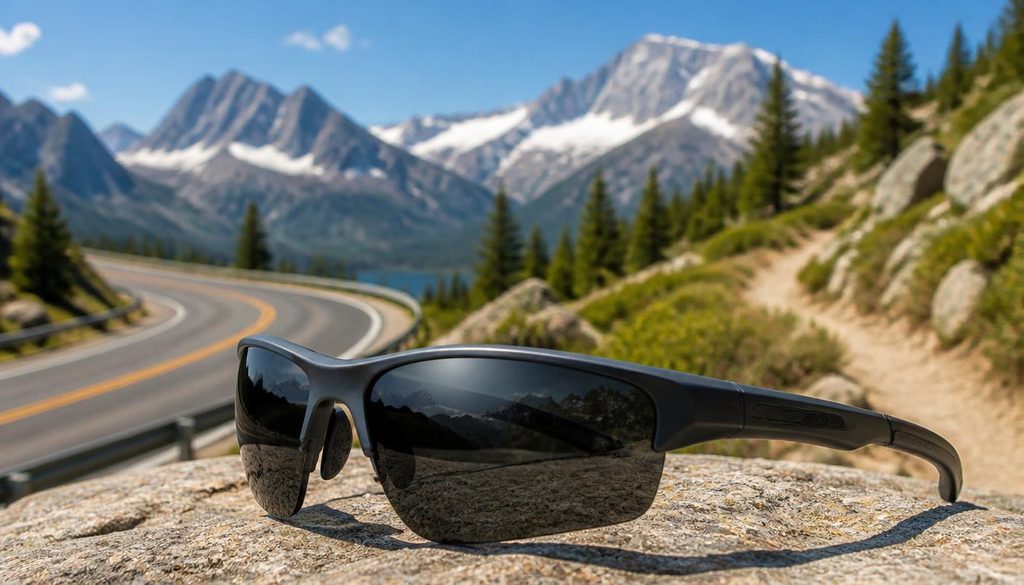
The best pair for a fashion event isn’t necessarily the best pair for a mountain trail.
For driving, consider lenses that provide good optical clarity, suitable glare reduction, and reliable UV filtering. Sunglasses for driving should not make your surroundings unnecessarily dark.
For hiking, broad coverage and comfortable fit become more important. Sunglasses for hiking should stay secure when you’re moving and ideally offer useful side protection.
For skiing, snow can reflect substantial sunlight, making strong UV protection particularly important. Wraparound or larger designs may provide helpful coverage.
For cycling and biking, lightweight construction, stability, ventilation, and peripheral vision can all matter.
This is where choosing the right sunglasses becomes less about fashion and more about matching the eyewear to the environment.
Frame Materials And Construction
The frame itself affects both appearance and comfort.
Thin metal frames can create a delicate, minimalist appearance. They’re common in aviator and certain geometric designs.
Thick frames generally create a stronger visual presence and are frequently found in wayfarer, oversized, and bold fashion designs.
Plastic frames can provide substantial visual structure and come in nearly endless colors and patterns.
The frame’s bridge, hinges, temple arms, upper frames, and lower rims all contribute to how the sunglasses sit on your face.
A good-looking pair that pinches your nose or slips constantly isn’t actually a good pair. Comfort has its own kind of beauty, honestly.
How To Choose Sunglasses That Suit Your Face
When choosing sunglasses for your face, don’t rely only on a mirror from six inches away.
Step back and look at the overall proportion. Notice whether the frame appears too narrow, too wide, too tall, or too small. Pay attention to how the top edge relates to your eyebrows and how the bottom edge sits relative to your cheeks.
Your facial features matter more than following a generic chart perfectly.
Try several shapes. Compare angular and curved frames. Try a lighter metal design, then a bold plastic one. Take a photo if you’re shopping in person because sometimes a frame looks completely different in a photograph than it does in a mirror.
And if you love a pair that technically breaks every supposed rule? Wear it. Style guides are tools, not courtroom verdicts.
Classic, Retro, Modern, Or Futuristic?
Your choice of eyewear can communicate a surprising amount about your personal style.
Aviators can create a classic appearance. Round frames can lean toward retro charm. Cat-eye frames may suggest vintage glamour. Wayfarers can feel timeless and casual. Shield sunglasses can move toward a futuristic aesthetic.
Modern geometric frames can make an outfit feel contemporary, while oversized designs can create a bold look without changing the rest of your clothing.
There are also trendy sunglasses that become popular for a season and then disappear. That’s perfectly fine too. Not everything needs to be timeless.
Sometimes you just want the sunglasses that make Tuesday afternoon feel slightly more interesting.
Sunglasses Are More Than A Fashion Accessory
It’s easy to think of sunglasses as another item sitting beside watches, handbags, jewelry, and other fashion accessories.
But quality eyewear serves a practical purpose too.
Good sunglasses can provide eye protection, reduce uncomfortable glare, and help limit exposure to harmful UV radiation. Depending on the design, they may also offer wind protection and useful coverage during outdoor activities.
The ideal pair therefore sits at the intersection of function and appearance.
You shouldn’t have to choose between looking good and caring about your eyes. Modern eyewear gives you plenty of ways to do both.
How To Find Your Own Sunglass Shape
Start with your face shape, but don’t stop there.
Think about the environments where you’ll wear the sunglasses. Consider whether you need maximum coverage, lightweight comfort, polarization, impact resistance, or simply a stylish everyday pair.
Then consider your wardrobe. If most of your clothes are minimal and neutral, bold eyewear can become the focal point. If your clothing is already colorful or heavily patterned, a simpler frame may create balance.
Most importantly, think about what feels like you.
A pair can be technically perfect for your face shape and still feel completely wrong for your personality. Another pair may be outside the usual recommendations and somehow look fantastic.
That is why the best sunglass shape guide should give you ideas, not restrictions.
Frequently Asked Questions
What Are the Most Popular Types of Sunglasses?
Popular sunglass types include aviators, wayfarers, round, cat-eye, square, and oversized frames.
Which Sunglass Shape Is Best for a Round Face?
Square and rectangular sunglasses can provide contrast and balance to a round face.
Are Aviator Sunglasses Suitable for All Face Shapes?
Aviator sunglasses can work with many face shapes, especially oval, square, and heart-shaped faces.
What Sunglass Shape Suits an Oval Face?
Most sunglass shapes suit oval faces, including square, round, aviator, and cat-eye frames.
How Do I Choose the Right Sunglass Shape?
Consider your face shape, frame size, comfort, and personal style when choosing sunglasses.
Read this Blog:https://ravonexium.com/how-big-is-11-inches/
Final Thoughts On Choosing The Right Sunglasses
The world of sunglass types is much bigger than aviators and black rectangular frames. There are round, square, cat-eye, butterfly, shield, geometric, oversized, sports, wraparound, browline, navigator, wayfarer, and countless variations between them.
Understanding sunglasses based on face shape gives you a useful place to begin. Learning about lens technology helps you choose more responsibly. And experimenting with different sunglass styles lets you discover what genuinely fits your personality.
Remember the important practical details: look for appropriate UV protection, consider polarized lenses when glare is an issue, make sure the frame fits securely, and choose eyewear suited to the activity.
Whether you’re searching for sunglasses for different face shapes, a pair for driving, stylish eyewear for everyday use, or protective frames for outdoor adventures, there isn’t one universal answer.
The right sunglasses are the ones that combine comfort, protection, proportion, and personal expression.
And perhaps that’s the nicest thing about choosing them. Just like picking a tiny outfit for a newborn baby girl or choosing a meaningful gift for someone you love, the details may seem small at first. But sometimes the smallest choices become the things we remember most.
So try the bold pair. Try the classic pair. Try the weird geometric ones that made you stop walking past the shop window.
Your face has its own shape, your style has its own story, and your sunglasses can be part of it.